When the Internet Writes the Campaign

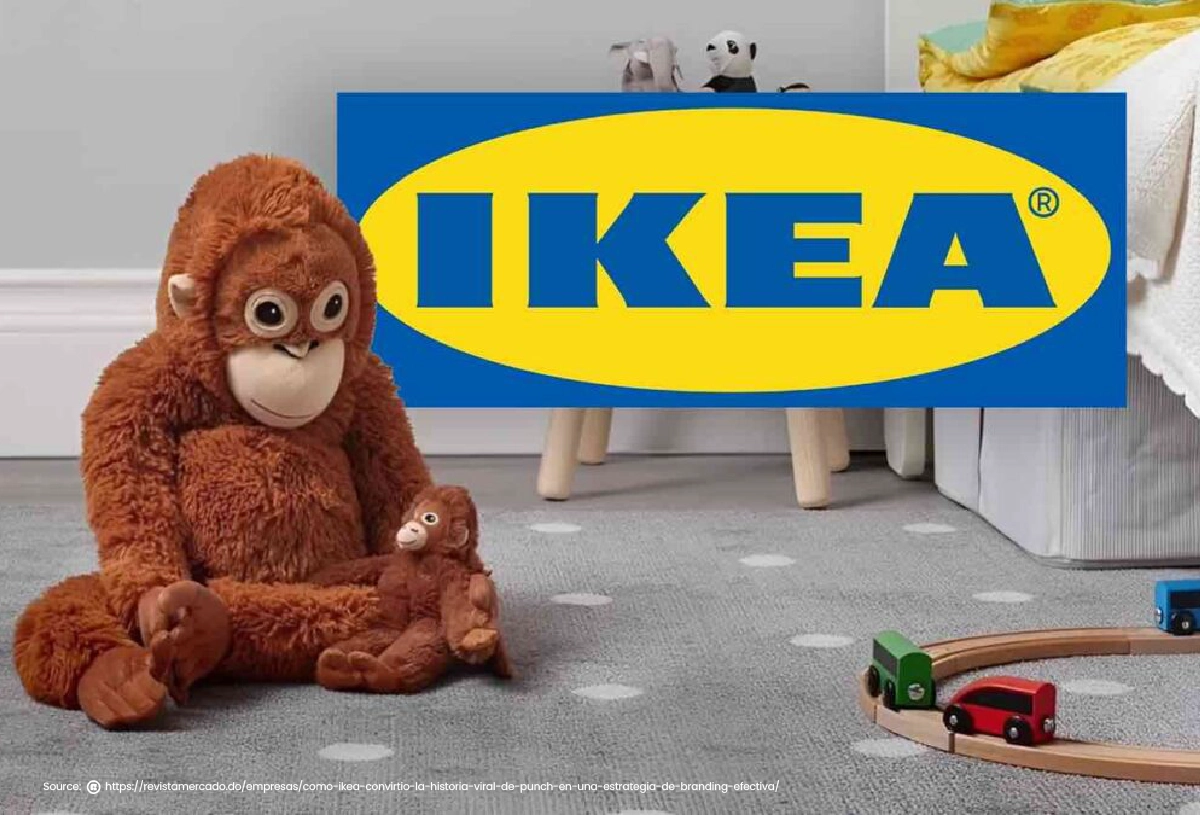
When real moments write your campaign: What IKEA learned from Punch the Monkey
In the fast-paced world of marketing and social media, this story is already old but let's look at how a baby macaque, a plush orangutan and a global furniture brand accidentally created one of the most interesting reactive marketing moments of recent years. The “Punch the Monkey” story wasn’t a campaign—it became a campaign, because the internet decided it should be.
Let's unpack how a spontaneous viral moment around Punch the Monkey and an IKEA plush toy turned into a powerful brand story. What happened, Why did it resonate and What can we learn about reactive marketing, brand readiness and letting audiences lead?
Key Takeaways
- Organic moments can outperform planned campaigns: You can’t always script emotional resonance—but you can be ready for it.
- The audience will tell you what matters: People didn’t fall in love with a product; they fell in love with a relationship.
- Reactive marketing is a discipline, not a scramble: The best responses look effortless because the thinking behind them isn’t.
- Brand consistency still matters in chaos: Fast doesn’t have to mean off-brand, off-tone or off-strategy.
- Earned stories can drive real commercial impact: A single viral clip can move product, perception and long-term brand equity.
What actually happened with Punch the Monkey and IKEA
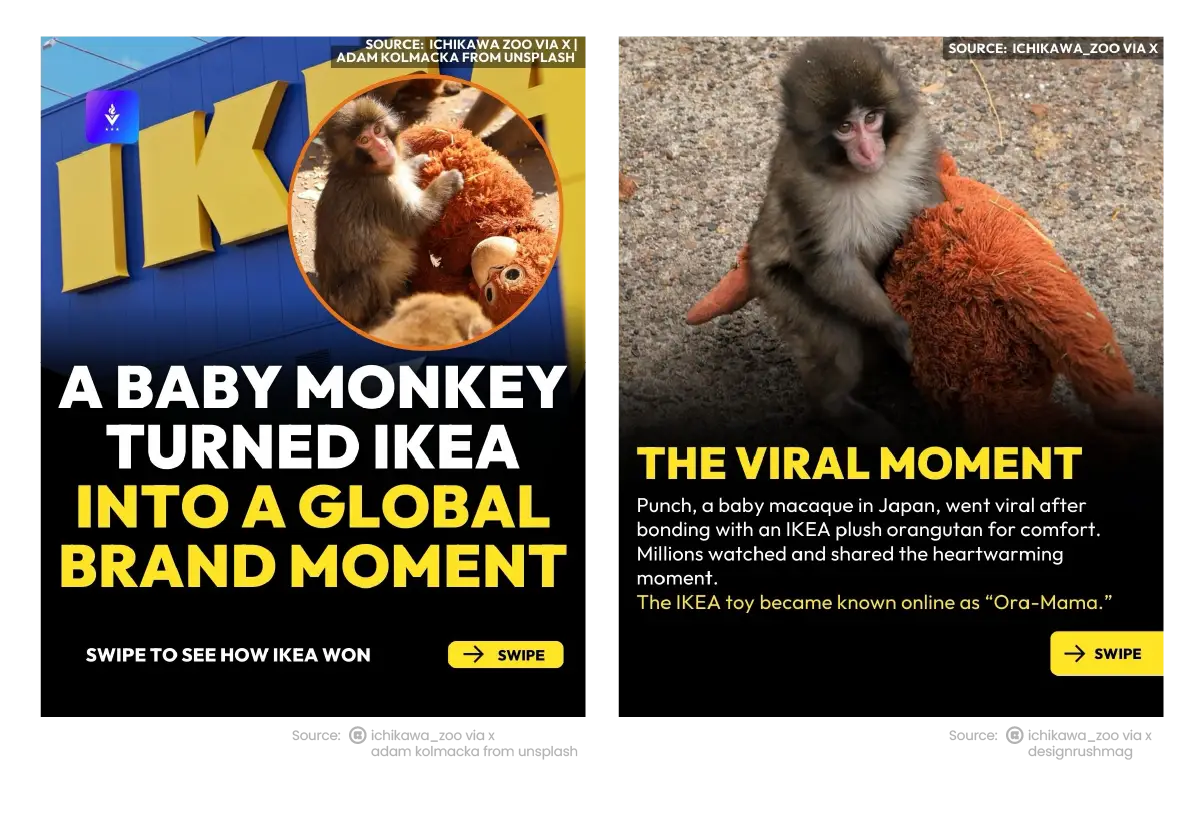
Punch is a young Japanese macaque at Ichikawa City Zoo who was rejected by his mother and troop. To comfort him, keepers gave him a plush orangutan—an IKEA Djungelskog toy.
Footage of Punch clinging to the toy spread rapidly across social platforms. The emotional contrast was striking: a vulnerable animal finding safety in something recognisably human and domestic. Viewers quickly identified the toy as IKEA’s, and demand surged. Stores sold out. Resale prices spiked.
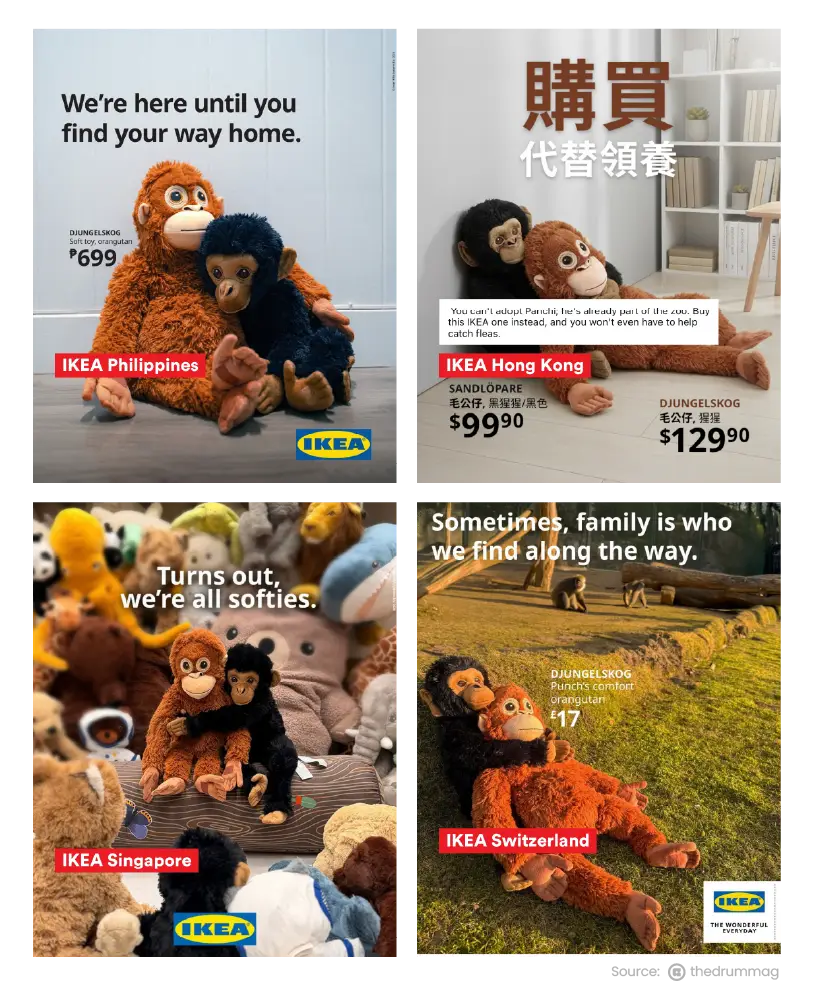
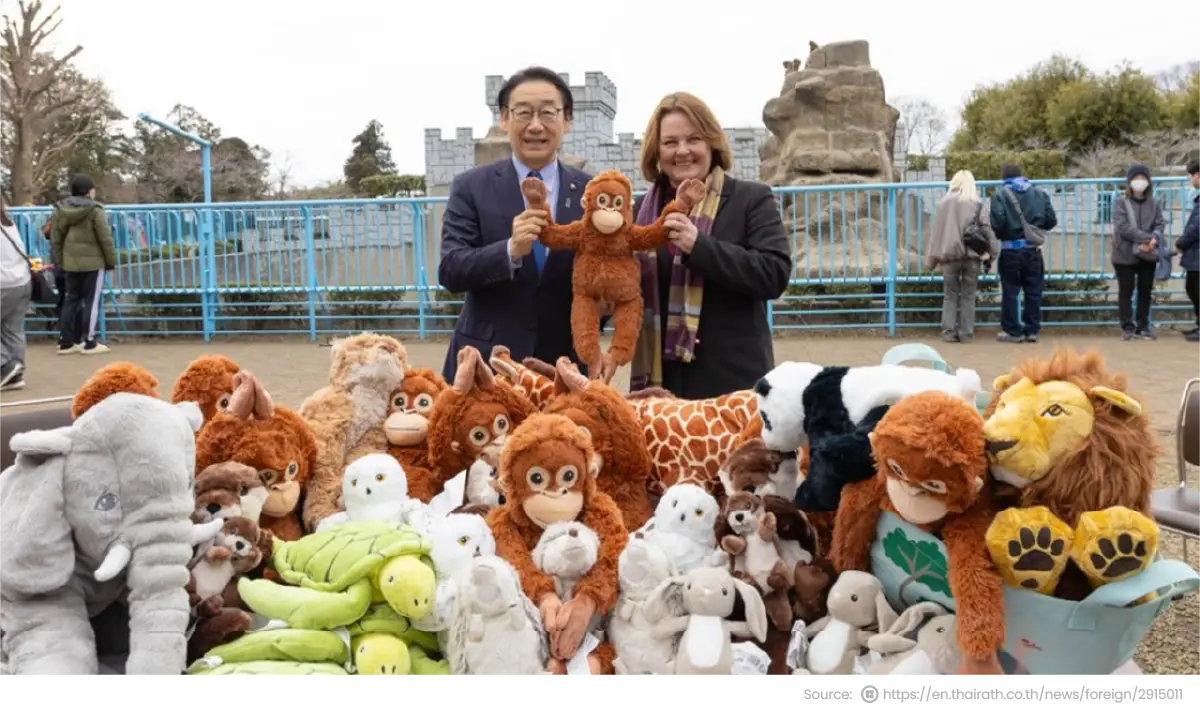
Only then did IKEA step in with formal communications and creative, acknowledging the story and aligning the product with Punch’s newfound fame. The “campaign” followed the moment—not the other way around.
Why this moment resonated so deeply:
Emotion first, brand second
This wasn’t about furniture, toys or Scandinavian design. It was about:
- Care: A rejected animal being comforted.
- Attachment: The way Punch held the toy mirrored how people hold their own comfort objects.
- Recognition: Viewers recognised the product in their own homes and lives.
The brand entered the story later, but the emotional groundwork was already laid. That’s why the association felt natural, not forced.
A perfect storm of shareability
The content had all the ingredients of a viral moment:
- Visual simplicity: One monkey, one toy, one clear emotional cue.
- Instant legibility: No explanation needed; the story is obvious at a glance.
- Safe, positive sentiment: Heartwarming, not polarising—easy to share without risk.
For marketers, this is a reminder: the most powerful brand stories are often the ones that don’t need copy to be understood.
Reactive marketing done right
IKEA’s response worked because it didn’t try to own the story—it joined it. Key moves included:
- Acknowledging, not hijacking: The focus stayed on Punch, not on IKEA’s cleverness.
- Aligning with existing brand values: Care, home, comfort, warmth—already core to IKEA’s positioning.
- Letting the community lead: The internet had already framed the narrative; IKEA amplified rather than rewrote it.
Building a brand that’s ready for its Punch the Monkey moment
The real insight from the Punch the Monkey and IKEA story isn’t “go viral.” It’s this:
- Build a brand with clear values.
- Create systems that allow for fast, thoughtful responses.
- Accept that sometimes the best campaigns are the ones your audience starts without you.
Other Insights